Planning on building a steel structure? You are sure to come across the term “purlin” pretty frequently. Amongst different types, there is one purlin that bears the bulk of the load: the lipped channel purlin, also called the C purlin. In this simple guide, we discuss its definition, sizes, applications, and importance in straightforward terms. After reading this article, you will know what to demand from your supplier.
What Is a Lipped Channel Purlin?
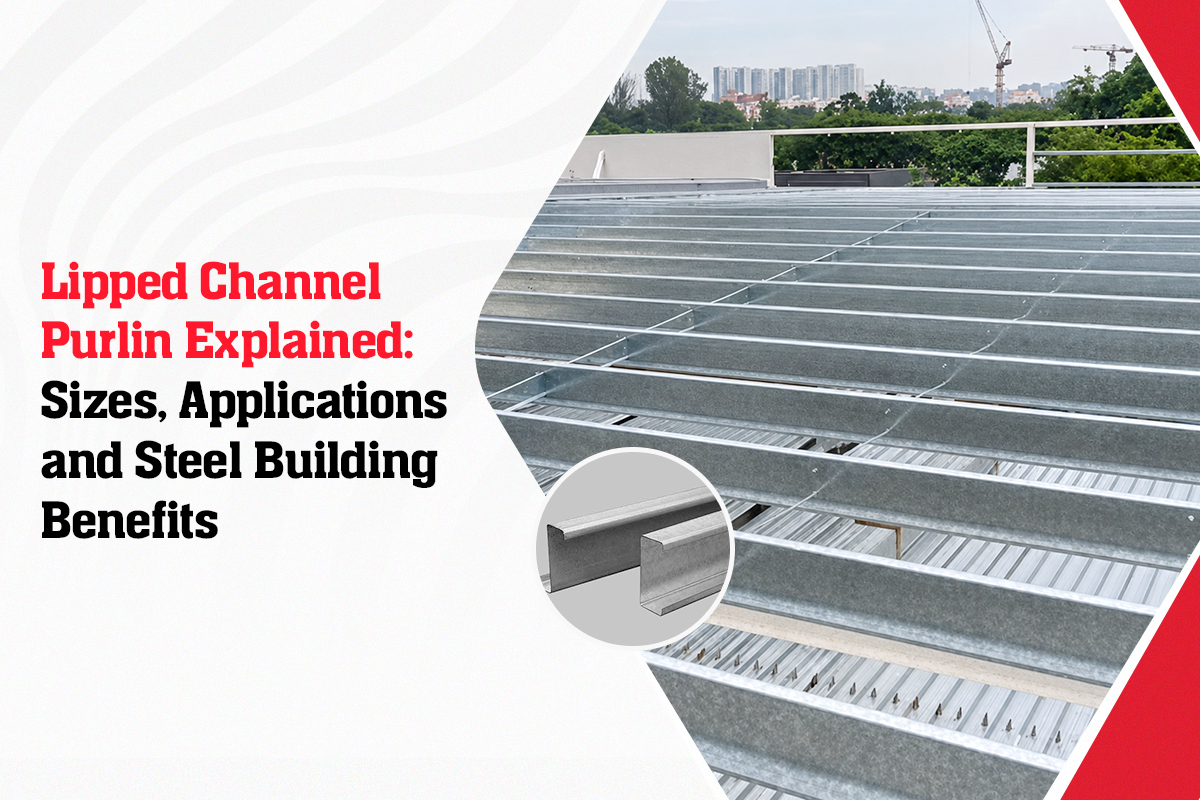
Picture the letter C made of steel, with a small fold, or “lip”, at each open end. That is a lipped channel purlin. It is made by cold forming, which means a flat steel strip is bent into shape at room temperature by rollers.
Those little lips perform a big task. The lips make the ends of the member strong. It will not bend easily, and it will not twist. The result is a light member with surprising strength. In a typical steel building, purlins sit across the main frames and hold up the roof sheets. Similar members on the walls, called girts, hold the wall cladding.
Common Sizes and Specifications
C Purlins are available in different depths to suit all sorts of structures, from small sheds to large factories. Take a look at the following details:
| Specification | Typical Range |
| C purlin depth | 50mm to 350mm |
| Z purlin depth (alternative) | 100mm to 300mm |
| Yield strength | 240 MPa or 345 MPa (standard) |
| Zinc coating | Z120, Z180 or Z275 GSM (AS 1397) |
| Design standards | AS 1538, BS 5950, IS 875 |
Rule of thumb: The greater the distance and weight that need to be supported, the greater the depth required for your purlin. Your structural engineer will pick the exact size from the manufacturer’s load tables. A good steel purlin supplier will share these tables freely and help with the selection.
Where Lipped Channel Purlins Are Used
You will find C purlins in almost every steel structure around you:
| Application | How the Purlin Helps |
| Factory and warehouse roofs | Main roofing support between frames |
| Wall cladding (as girts) | Holds wall sheets straight and secure |
| Mezzanine floors | Supports floor decking and loads |
| Solar panel structures | Light, strong framing for modules |
| Sheds and canopies | Simple, economical framing |
C purlins are simple to bolt in place. They suit single spans, and with connection sleeves they also work across longer multi-span roofs. Where continuous overlapping spans are needed, the Z purlin, a cousin of the C purlin, is often used instead. A manufacturer that makes both can guide you to the right one.
Why Steel Buildings Rely on Them
The benefits are easy to list, and easy to feel in the final bill:
Light but strong: High tensile steel gives the strength of heavier sections at a fraction of the weight. Lighter purlins mean reduced weight, smaller foundations and lower cost.
Rust protection built in: A galvanised purlin has a protective layer of zinc that protects the metal from coming into contact with water. There are different grades of coatings available, such as Z120 up to Z275 GSM, which makes it easier to use a thicker coating in wet or coastal areas.
Fast to install: Purlins arrive cut to length, punched and ready to bolt. There’s no need for welding, cutting on-site, or any delays.
Accurate and consistent: Cold forming on modern machines keeps every purlin true to size, so the roof sheets sit flat and fix cleanly.
Economical. Using less steel and requiring less labour and time on-site results in one of the most economical framing options.
What to Check Before You Buy
Use the following list when talking to your supplier:
- Size range: Can they supply the full range of depths your design needs?
- Coating grade: Ask for the zinc coating in GSM, matched to your location.
- Steel grade: See the yield strength, since it could either be 240 MPa or 345 MPa based on the nature of the work.
- Standards: See the designs that comply with AS 1538, BS 5950 and IS 875.
- Accessories: The same manufacturer should preferably supply brackets, bolts and sleeves to ease installation.
- Certification: An ISO 9001:2015 certification of the manufacturing facility indicates the consistency of the quality.
In case your supplier is not able to provide a satisfactory response to any of these, find another supplier. Remember that purlins support your roof for many years to come.
LCP Building Products Pvt. Ltd is one of the prominent purlin manufacturers in India. The company produces various purlins, including C Purlins ranging from 50 mm depth to 350 mm depth and Z Purlins ranging from 100 mm depth to 300 mm depth, all roll-formed from high-tensile steel. These purlins are available in various forms of zinc coating, including Z120, Z180, and Z275 GSM based on AS 1397. The company also manufactures purlins in standard yield strengths of 240 MPa and 345 MPa and conforms to AS 1538, BS 5950, and IS 875. LCP Building Products Pvt. Ltd offers various types of accessories, which include brackets, bolts, downturn lips, and non-standard purlins upon request. These products are manufactured at our Chennai facility, supported by ISO 9001:2015, ISO 14001:2015 and ISO 45001:2018 certifications. Contact us today for your complete package of purlins for your steel structure.
The lipped channel purlin is the unsung hero of structural steelwork – a lightweight cold-formed C-section used to support roofs, walls, floors, and solar installations at minimal cost. Select the correct depth for your span, choose the right zinc galvanisation for your geographic location, and purchase from an approved manufacturer with appropriate load tables, and you will ensure the longevity of your building structure.