
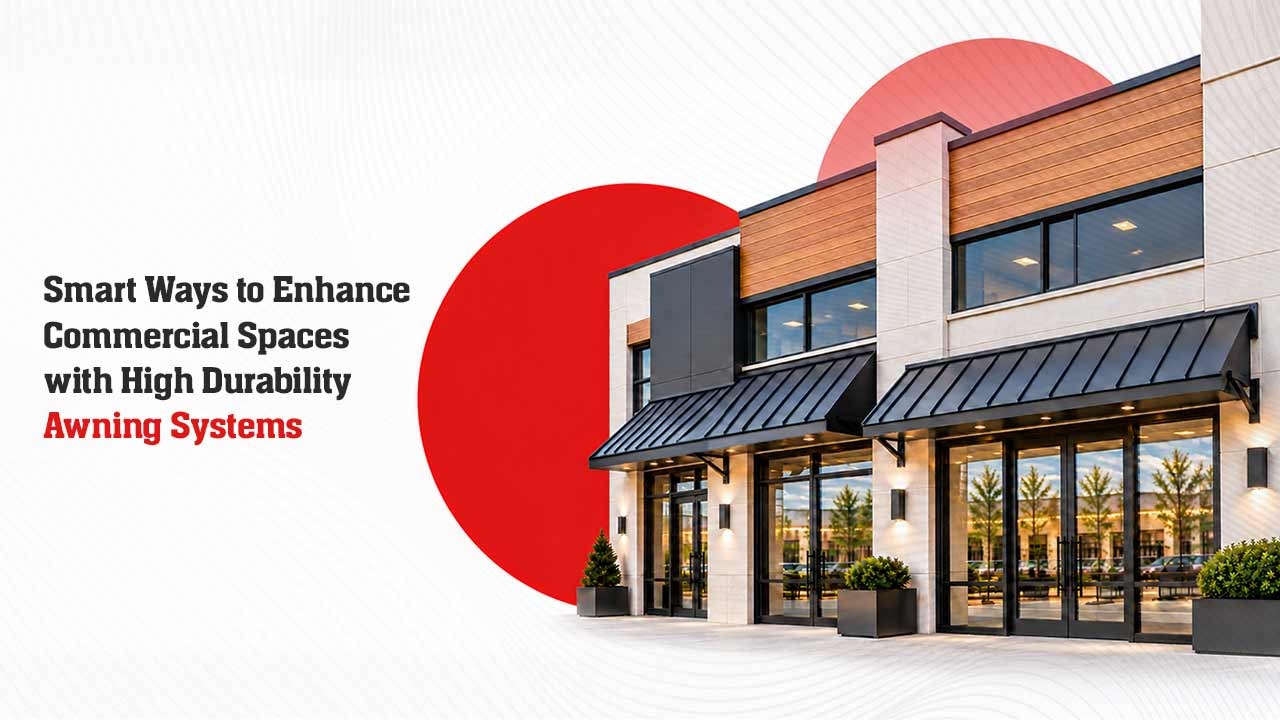
A commercial building has to deal with sun, rain and heat every day. For shops, offices, cafes and other public spaces, this can make entrances, walkways and outdoor areas uncomfortable.
An awning offers a simple way to provide shade and some protection from the weather. It can also add character to a building and make an entrance easier to notice.
For commercial projects, however, choosing an awning is not only about appearance. The material, profile, finish and structure all need to suit the building and its surroundings.
What Is an Awning Used for in Commercial Buildings?
An awning can be used in several areas of a commercial property. It can cover entrances, walkways, outdoor seating, shopfronts and other exposed spaces.
A key benefit is the shade it provides. When installed over windows or glass shopfronts, an awning blocks some of the direct sunlight, helping keep the area around the windows cooler and more comfortable.
It also provides protection from rain. For businesses with customer-facing entrances, a covered area can make a small but noticeable difference during wet weather.
There is an architectural benefit too. A well-designed awning can give an entrance more definition and help connect the building’s roof and facade.
Why Choose an Outdoor Metal Awning?
Material choice makes a difference when an awning is exposed to Singapore’s year-round weather.
An outdoor metal awning is a practical option for commercial buildings because metal offers a strong, durable structure without the upkeep associated with some fabric systems. It also offers a more permanent appearance, which can work well with modern commercial architecture.
Fabric awnings have their place, but they can be more vulnerable to issues such as fading, tearing and sagging over time, depending on the material and exposure.
Metal also offers architects more choice in profiles and finishes. This makes it easier to create an awning that fits the existing building rather than looking like a separate addition.
How Does Architectural Sun Shading Improve a Building?
Architectural sun shading is increasingly considered during the design of commercial buildings, particularly where large areas of glass are involved.
The basic idea is simple: shade the glass before direct sunlight reaches it. This can reduce solar heat gain and may help lower the demand placed on air conditioning.
An awning can also make outdoor areas more useful. A shaded entrance or seating area is likely to be more comfortable than one exposed to direct sun for most of the day.
The amount of shading an awning provides depends on its size, position, orientation and the building itself. These details should therefore be considered during the design stage rather than after construction is complete.
How to Choose Durable Awning Systems for Commercial Use
A durable awning starts with the right material, but several other details matter as well.
The first is the finish. Since the awning will be exposed to the weather, the selected metal and coating should be suitable for the project’s environment.
The profile is another important consideration. Premium roof profiles can provide a clean appearance while also giving the panel the shape needed for the application. The right profile will depend on factors such as span, support and drainage requirements.
The structure also needs proper attention. Even a relatively small awning is exposed to wind and rain, so its supports, fixings and connections should be designed for the intended application.
Finally, consider the accessories. Flashings, trims, and other components should work with the main panels to create a neat, properly finished system.
Can Commercial Building Products Be Used for Awning Design?
An awning is often part of a larger building envelope. It may sit alongside roofing, wall cladding, windows and other exterior elements.
This makes experience with commercial building products useful when planning an awning. A supplier familiar with roofing and cladding can help coordinate the profile, finish and detailing with the rest of the building.
Using complementary materials can also create a more consistent appearance across the facade.
For example, an awning can be finished to work with the colour and profile of existing roofing or wall cladding. This is particularly useful for commercial properties where the exterior needs to follow an established brand or architectural style.
Why Are Premium Roof Profiles Worth Considering?
The profile of a metal panel affects more than its appearance. It can influence how the panel handles water, how it spans between supports and how the finished awning looks.
Premium roof profiles can be considered when a project requires a clean architectural finish and practical performance.
The best option will depend on the individual project. Width, projection, support spacing, drainage, finish and fixing details should all be considered before selecting a profile.
Getting this right at the design stage can avoid later changes and help the finished awning sit naturally within the building’s overall design.
Choosing the Right Awning Supplier
The supplier you choose can make the design and installation process easier. Look for a company that understands metal roofing, cladding and the requirements of commercial projects.
LCP Building Products offers roofing, cladding and other solutions for commercial projects. Its experience with metal profiles also helps project teams choose awning options that work well with the rest of the building.
Whether the requirement is for a shopfront, entrance, walkway or outdoor area, the awning should be selected based on how it will look, where it will be installed and what it needs to handle.
FAQs
What is an awning used for?
An awning provides shade and weather protection over areas such as entrances, walkways, shopfronts and outdoor seating. It can also add an architectural element to a building.
Is an outdoor metal awning suitable for Singapore?
Yes. Metal can be suitable for outdoor applications in Singapore when the material, finish and structure are selected for the project’s conditions.
Can architectural sun shading reduce heat gain?
External shading can reduce the direct sunlight reaching windows and glazed areas, helping reduce solar heat gain. The result depends on the building and the design of the shading system.
What should I consider when choosing an awning profile?
Consider the required projection and span, drainage, support arrangement, finish, and how the profile will look relative to the existing building.
Can an awning match existing roofing and cladding?
Yes. The profile and finish can be selected to complement the building’s existing roofing, wall cladding and overall design.